Daily reflection and inspiration from the "Prince of Preachers," Charles Haddon Spurgeon.
Showing posts with label eternity. Show all posts
Tuesday, June 11, 2013
You Shall Dwell In The King's Palace
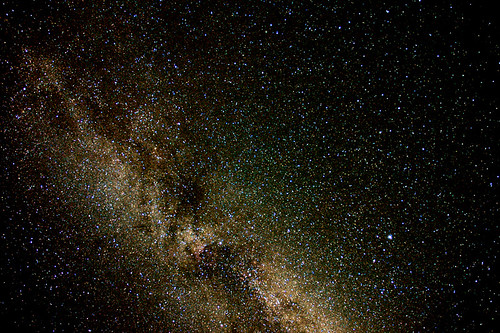
Oh, how loftily is he lifted up to sit upon a glorious high throne for ever! But you shall sit upon his throne with him and share his exaltation as you have shared his humiliation. Oh, the delight of thus being joint heirs with Christ, and with him in the possession of all that he possesses. What is heaven? It is the place which his love suggested, which his genius invented, which his bounty provided, which his royalty has adorned, which his wisdom has prepared, which he himself glorifies; in that heaven you are to be with him for ever. You shall dwell in the King’s own palace. Its gates of pearl and streets of gold shall not be too good for you. You who love him are to abide for ever with him, not near him in a secondary place, as a servant lives at the lodge gate of his master’s mansion, but with him in the self-same palace in the metropolis of the universe.
From a sermon by Charles Haddon Spurgeon entitled "Forever With The Lord," delivered September 16, 1877. Image by Peggy2012CREATIVELENZ on Flickr under Creative Commons License.
Labels:
Christ,
Christianity,
Christians,
eternity,
Heaven,
Jesus,
religion,
Spurgeon
Saturday, August 25, 2012
Rejoice that your name is written above!
Gifts, attainments, labors, successes, all heaped together, cannot support a soul on the verge of eternity. There is ever present the fact that such things are no sure sign of regeneration. Did not the sons of the Pharisees cast out devils? Did not the people say of Simon Magus, “This man is the great power of God”? Yet these were graceless deceivers. We must have sure evidence of the new birth, we must know that our citizenship is in heaven, we must know that we belong to Jesus, in one word, we must know that our names are written in heaven, or else we shall find ourselves utterly undone in our dying hours. For all these reasons, then, be not too elated, because of devils conquered, crowds gathered, or souls saved; but hearken to your Lord’s voice while he points you to other reasons for rejoicing.
From a sermon by Charles Haddon Spurgeon entitled "Why May I Rejoice?," delivered October 29, 1876. Image by Diego Torres Silvestre on Flickr under Creative Commons License.
Thursday, July 12, 2012
Seeking eternal life with all your heart
O man, if thou wert in a burning house thou wouldst be eager to get out of it; if there seemed a probability that thou wouldst sink in a river thou wouldst struggle desperately to get to shore, how is it then that thou art so little moved by the peril of thy soul? Man is aroused when his life is once known to be in peril, how much more earnest ought he to be when eternal life or eternal death are the solemn alternative “What meanest thou, O sleeper? Arise, and call upon thy God!”
Look, moreover, at the greatness of the mercy which thou art seeking. It is none other than pardon of all thy sins, perfect righteousness in Christ Jesus, safety through his precious blood, adoption into the family of God, and eternal enjoyment of the presence of God in heaven. They that seek for pearls, and gold, and precious stones, use all their eyes and all their wits, but what are those gaudy toys compared with these immortal treasures? How ought a man to seek after heaven and eternal life? Should it not be with all his heart?
From a sermon by Charles Haddon Spurgeon entitled "A Second Word To Seekers," delivered September 10, 1876. Image by Linda Cronin on Flickr under Creative Commons License.
Friday, March 23, 2012
Your labors will live on
And establish thou the work of our hands upon us; yea, the work of our hands establish thou it. (Psalm 90:17)
Let what we do be done in truth, and last when we are in the grave; may the work of the present generation minister permanently to the building tip of the nation. Good men are anxious not to work in vain. They know that without the Lord they can do nothing, and therefore they cry to him for help in the work, for acceptance of their efforts, and for the establishment of their designs. The church as a whole earnestly desires that the hand of the Lord may so work with the hand of his people, that a substantial, yea, an eternal edifice to the praise and glory of God may be the result.
We come and go, but the Lord's work abides. We are content to die so long as Jesus lives and his kingdom grows. Since the Lord abides for ever the same, we trust our work in his hands, and feel that since it is far more his work than ours he will secure it immortality. When we have withered like grass our our holy service, like gold, silver, and precious stones, will survive the fire.
From the "Treasury of David" by Charles Haddon Spurgeon, exposition of Psalm 90. Image by Ryan.Berry on Flickr under Creative Commons License.

Friday, January 22, 2010
We shall give eternal praise

The sun shall grow dim with age, and the whole universe shall shrivel up like a scroll that is burnt in the flame; but God has selected immortal men who cannot die, and in these he has wrought a work which they never can forget, a work which has plunged them under solemn obligations to him which they never can discharge, bound them to himself by grateful ties of affection which nothing can dissolve. He has plucked us out of the horrible pit, and put us into such a place that throughout eternity it shall be our delight, cur very life, to praise and magnify his name.
Oh, how will we tell angels what he has done! How will we show forth in every street to the sacred inhabitants what grace has done for us, and how the love of God accomplished a mighty triumph over our sins! We will tell the cherubim and seraphim what God has done, and make them think they never saw God before till they beheld him working in men. Long adown the ages, when the morning star is laid asleep, we will tell our fellow immortals, of Golgotha, of Calvary, of Jesus and his love; we will repeat the story of the cross; we will publish abroad the story of the God that loved and died, and of the triumph of the pierced and crucified One when he entered the doors of our hearts and captured us by the force of his love. This then will be an everlasting sign unto the Lord our God. Let this encourage Christians.
From a sermon entitled "The Lord's Name And Memorial," delivered September 27, 1868. Image by Jeff under Creative Commons License.
Friday, January 15, 2010
Where we're headed!

I say our souls shall come back to their bodies to a new marriage. The spirit and the body shall be knit together once again, so that our manhood shall be again entire, body, soul, and spirit, all being in glory even as we are here on earth, but far more gloriously developed. Believers in Christ know that the first resurrection delivers them from all fear of second death. We shall reign with Christ upon the earth: a thousand years of glory shall be given unto the saints; on this selfsame globe in which they suffered with their Master they shall triumph with him. Then in the last time when Jesus shall have delivered up the kingdom unto God, even the Father, then the people of God shall reign forever and ever in unsurpassed and unimaginable delight.
From a sermon entitled "Dying Daily," delivered August 30, 1868. Image by Till Krech under Creative Commons License.
Thursday, July 30, 2009
The Everlasting Father

“The everlasting Father.”-Isaiah 9:6.
Just as the idiom, “the father of wisdom,” implies that a man is pre-eminently wise, so the term, “Father of eternity,” implies that Jesus is preeminently eternal; that to him, beyond and above all others, eternity may be ascribed. No language can more forcibly convey to our minds the eternity of our Lord Jesus. Nay, without straining the language, I may say that not only is eternity ascribed to Christ, but he is here declared to be the parent of it. Imagination cannot grasp this, for eternity is a thing beyond us; yet if eternity should seem to be a thing which can have no parent., be it remembered that Jesus is so surely and essentially eternal, that he is here pictured as the source and Father of eternity. Jesus is not the child of eternity, but the Father of it.
Eternity did not bring him forth from its mighty bowels, but he brought forth eternity. Independent, self-sustained, uncreated, eternal existence is with Jesus our Lord and God.
From a sermon entitled "His Name - the Everlasting Father," delivered December 9, 1866. Image by Satoru Kikuchi under Creative Commons License.
Tuesday, May 13, 2008
God the I AM

With God, indeed, there is neither past, present, nor future. He takes for his name the “I AM.” He does not call himself the “I WAS,” for then we should conceive that he used to be something which he is not now; that some part of his character had changed, or some attribute ceased from existence, for there is an ominous sound of annihilation in the sound of the word, “He WAS.” Is it not rather a knell for the dead, than a name for the living? Nor does our Lord God speak of himself as the “I SHALL BE,” for that might lead us to imagine that he is not now something which he is to be in the ages to come: whereas, we know that his being is perfect, his essence infinite, his dominion absolute, his power unlimited, and his glory transcendent. Development is out of the question, he is all to-day that he will be in future.
Of the Lord Jesus we read that he is the Everlasting Father, and yet he has the dew of his youth. Childhood, manhood and old age belong to creatures, but at the right hand of the Most High they have no abode. Growth, progress, advancement, all these are virtues in finite beings, but to the Infinite the thought of such change would be an insult. Yesterday, to day, and tomorrow, belong to dying mortal, the Immortal King lives in an eternal today. He is the I AM; I AM in the present; I AM in the past and I AM in the future. Just as we say of God that he is everywhere, so we may say of him that he is always; he is everywhere in space; he is everywhere in time. God is today in the past; he is today already in the future; he is today in that present in which we are.
From a sermon entitled "God's Estimate Of Time," delivered April 27, 1862. Flickr photo by Sean McGrath; some rights reserved.
Tuesday, March 4, 2008
From everlasting to everlasting

“Before the mountains were brought forth.”
Before those elder giants had struggled forth from nature's womb, as her dread firstborn, the Lord was glorious and self-sufficient. Mountains to him, though hoar with the snows of ages, are but new-born babes, young things whose birth was but yesterday, mere novelties of an hour.
“Or ever thou hadst formed the earth and the world.”
Here too the allusion is to a birth. Earth was born but the other day, and her solid land was delivered from the flood but a short while ago.
“Even from everlasting to everlasting, thou art God,” or, “thou art, O God.”
God was, when nothing else was. He was God when the earth was not a world but a chaos, when mountains were not upheaved, and the generation of the heavens and the earth had not commenced. In this Eternal One there is a safe abode for the successive generations of men. If God himself were of yesterday, he would not be a suitable refuge for mortal men; if he could change and cease to be God he would be but an uncertain dwelling-place for his people.
From the Treasury of David, exposition of Psalm 90:4. Flickr photo by Christian Abend; some rights reserved.
Subscribe to:
Posts (Atom)