Thursday, March 10, 2011

What makes my soul dance...


There was nothing in the character of Jupiter, or any of the pretended gods of the heathen, to make glad a pure and holy spirit, but there is everything in the character of Jehovah both to purify the heart and to make it thrill with delight. How sweet is it to think over all the Lord has done; how he has revealed himself of old, and especially how he has displayed his glory in the covenant of grace, and in the person of the Lord Jesus Christ. How charming is the thought that he has revealed himself to me personally, and made me to see in him my Father, my friend, my helper, my God.

Oh, if there be one word out of heaven that cannot be excelled, even by the brightness of heaven itself, it is this word, “My God, my Father,” and that sweet promise, “I will be to them a God, and they shall be to me a people.” There is no richer consolation to be found: even the Spirit of God can bring nothing home to the heart of the Christian more fraught with delight than that blessed consideration. When the child of God, after admiring the character and wondering at the acts of God, can all the while feel “he is my God; I have taken him to be mine; he has taken me to be his; he has grasped me with the hand of his powerful love; having loved me with an everlasting love, with the bands of lovingkindness has he drawn me to himself; my beloved is mine and I am his;” why, then, his soul would fain dance like David before the ark of the Lord, rejoicing in the Lord with all its might.

From a sermon by Charles Haddon Spurgeon entitled "The Joy of the Lord, The Strength of His People" delivered December 31, 1871. Image by Bill Harrison under Creative Commons License.

Wednesday, March 9, 2011

Christ The Bridge


Sin had separated between God and man; but the incarnation bridges the separation: it is a prelude to the atoning sacrifice, but it is a prelude full of the richest hope. From henceforth, when God looks upon man, he will remember that his own Son is a man. From this day forth, when he beholds the sinner, if his wrath should burn, he will remember that his own Son, as man, stood in the sinner’s place, and bore the sinner’s doom.

From a sermon by Charles Haddon Spurgeon entitled "Joy Born At Bethlehem," delivered December 24, 1871. Image by F Mira under Creative Commons License.

Tuesday, March 8, 2011

This is what we wait for...


The pure motive of any man who serves his generation well is generally misrepresented. As a rule the lounger looks on at the laborer not to praise but to blame him: not to cheer him but to chide him. The less he does, the less he will be open to rebuke, and the more he does oftentimes, and the more vigorously, the more he shall be upbraided.

Look not for your reward here. Suppose men praise you, what is their praise worth? It would not fill your nostrils if you were about to die. The approbation of those who have neither skill nor taste — what pleasure can it afford the artist? Should one stoop for it, or, having it, lift his head the higher? Our reward is the approbation of God, which he will give of his abundant grace. He first gives us good works, as one observes, and then rewards us for those good works, as if they were altogether our own. He gives rewards though they are not a debt, but altogether of grace.

Look for the reward hereafter. Wait a bit, man, wait a bit; your reward is not yet. Wait till the week is over, and then shall come the wage. Wait until the sun is gone down, and then there will be the penny for every laborer in the vineyard. Not yet, not yet, not yet. The husbandman waiteth for the precious fruit of the earth. This is what we wait for.

From a sermon by Charles Haddon Spurgeon entitled "A Visit to the Harvest Field." Image by docentjoyce under Creative Commons License.

Monday, March 7, 2011

An offering God can accept


As prayer will not be truly prayer without the Spirit of God, so it will not be prevailing prayer without the Son of God. He, the Great High Priest, must go within the veil for us; nay, through his crucified person the veil must be entirely taken away; for, until then, we are shut out from the living God. The man who, despite the teaching of Scripture, tries to pray without a Savior insults the Deity; and he who imagines that his own natural desires, coming up before God, unsprinkled with the precious blood, will be an acceptable sacrifice before God, makes a mistake; he has not brought an offering that God can accept, any more than if he had struck off a dog’s neck, or offered an unclean sacrifice. Wrought in us by the Spirit, presented for us by the Christ of God, prayer becomes power before the Most High, but not else.

From a sermon by Charles Haddon Spurgeon entitled "The Throne Of Grace," delivered November 19, 1871. Image by H Matthew Howarth under Creative Commons License.

Saturday, March 5, 2011

Jesus: The Final Altar, Priest and Sacrifice


There is but one altar, Jesus Christ our Lord. All other altars are impostures and idolatrous inventions. Whether of stone, or wood, or brass, they are the toys with which those amuse themselves who have returned to the beggarly elements of Judaism, or else the apparatus with which clerical jugglers dupe the sons and daughters of men.

Holy places made with hands are now abolished; they were once the figures of the true, but now that the substance has come, the type is done away with. The all-glorious person of the Redeemer, God and Man, is the great center of Zion’s temple, and the only real altar of sacrifice. He is the church’s head, the church’s heart, the church’s altar, priest, and all in all.

From a sermon by Charles Haddon Spurgeon entitled "Praises And Vows Accepted In Zion." Image by Rennett Stowe under Creative Commons License.

Friday, March 4, 2011

Let Us Not Sleep


“Let us not sleep, as do others.” — 1 Thessalonians 5:6


The Savior, as I see him throughout the whole of his ministry, appears to me on his knees pleading, and before his God agonising — laying out his life for the sons of men. But, brethren, do I speak harshly when I say that the disciples asleep are a fit emblem of our usual life? As compared or rather contrasted with our Master, I fear it is so.

Where is our zeal for God? Where is our compassion for men? Do we ever feel the weight of souls as we ought to feel it? Do are ever melt in the presence of the terrors of God which we know to be coming upon others? Have we realised the passing away of an immortal spirit to the judgment bar of God? Have we felt pangs and throes of sympathy when we have remembered that multitudes of our fellow creatures have received, as their eternal sentence, the words — "Depart ye cursed into everlasting fire in hell, prepared for the devil and his angels?" Why, if these thoughts really possessed us, we should scarce sleep; if they became as real to us as they were to him, we should wrestle with God for souls as he did, and become willing to lay down our lives, if by any means we might save some.

I see by the eye of faith, at this moment, Jesus pleading at the mercy-seat. “For Zion’s sake,” he saith, “I will not hold my peace, and for Jerusalem’s sake I will not rest;” and yet, we around him lie asleep, without self-denying activity, and almost without prayer, missing opportunities, or, when opportunities for doing good have been seized, using them with but a slothful hand, and doing the work of the Lord, if not deceitfully, yet most sluggishly. Brethren, “let us not sleep, as do others.” If it be true that the Christian Church is to a great extent asleep, the more reason why we should be awake; and, if it be true, as I fear it is, that we have ourselves slumbered and slept, the more reason now that we should arise and trim our lamps, and go forth to meet the Bridegroom. Let us from this moment begin to serve our Master and his church more nearly after the example which he himself has set us in his consecrated life and blessed death. Let us not sleep then, as did the disciples at Gethsemane.

From a sermon by Charles Haddon Spurgeon entitled "Sleep Not." Image by Christian Revival Network under Creative Commons License.

Thursday, March 3, 2011

Fed by God


The Lord refreshed his weary people with “food convenient for them.” As the oxen, after the yoke was removed, were fed, so God, when he had removed our yoke of guilty bondage, fed us with the finest of the wheat, as he made us understand the gospel of his Son. The doctrines and promises of his word are substantial meat for hungry souls. “My soul shall be satisfied with marrow and fatness, and my mouth shall praise thee with joyful lips.” Certain under-shepherds are afraid of laying too much doctrinal food before the Lord’s people, but it is a great mistake. Truth never surfeits, though it always satisfies. The Good Shepherd does not stint his sheep, but he gives them so much, that they lie down amid the exceeding plenty of the green pastures. They cannot eat it all, and they lie down in the midst of a superabundance, which infinite mercy has provided.

From a sermon by Charles Haddon Spurgeon entitled "Heaven's Nurse Children." Image by jaci Lopes dos Santos under Creative Commons License.

Wednesday, March 2, 2011

The Sun of Righteousness


The king of day is so vast and so bright that the human eye cannot bear to gaze upon him; we delight in his beams, but we should be blinded should we continue to peer into his face; even yet more brilliant is our Lord by nature, for as God he is a consuming fire, but he deigns to smile upon us with milder beams as our brother and Redeemer. Jesus, like the sun, is the center and soul of all things, the fullness of all good, the lamp that lights us, the fire that warms us, the magnet that guides and controls us; he is the source and fountain of all life, beauty, fruitfulness, and strength; he is the fosterer of tender herbs of penitence, the quickener of the vital sap of grace, the ripener of fruits of holiness, and the life of everything that grows within the garden of the Lord. Whereas to adore the sun would be idolatry; it were treason not to worship ardently the divine Sun of Righteousness.

From a sermon by Charles Haddon Spurgeon entitled "The Sun of Righteousness," delivered November 12, 1871. Image by chantrybee under Creative Commons License.

Tuesday, March 1, 2011

Bring them to hear the Word


It is not all who hear that will be saved, but the ordinary way with God is for men first to hear, then to believe, and so to be saved. “Being in the way, God met with me,” said Obadiah; and the road which a soul should follow to be met with by God is the way of hearing. Though it may seem a very trite thing to say, it is nevertheless exceedingly important, if we are to have household conversion, that there should be a household hearing of the word. This is the chosen instrumentality, and we must bring all under the instrumentality if we wish them to obtain the blessing.

Now, in this City, many fathers never hear the word of God, because they regard the Sabbath Day as a day of laziness. They work so hard all the week, they say, that they are not fit to rise from their beds in the morning, and then, after a heavy dinner, the evening must be spent in loitering about, and chatting away time. Brethren, if you want to see your fellow-workmen saved, you should earnestly endeavor to bring them under the sound of the gospel. Here is a very useful occupation for many of you. You cannot preach, but you can gather a congregation for those who do. A little persuasion would succeed in many cases, and once bring them here, we would hope to hold them.

If I could not be the instrument of converting a soul by preaching the gospel myself, I would habitually addict myself to the bringing of strangers to listen to those whom God has owned to the conversion of souls. Why, our congregations need never be thin — I speak not now for myself, for I have no need — but in no place where the gospel is preached need there be a thin audience, if those who already appreciate the Gospel would feel it to be a Christian duty to bring others to hear it. Do this, I pray you. I believe it to be one of the most important efforts which a Christian man can make, to endeavor to bring the working men of London, and, indeed, all classes of men everywhere, to listen to the Gospel of Christ. The men, the fathers, the heads of households, we must have.

From a sermon by Charles Haddon Spurgeon entitled "Household Salvation," delivered November 5, 1871. Image by Hugo Silva under Creative Commons License.

Monday, February 28, 2011

Pleading with God


For my part, brethren and sisters, I desire to feel a spirit of urgency within my soul as I plead with God for the dew of his grace to descend upon this church. I am not bashful in this matter, for I have a license to pray. Mendicancy* is forbidden in the streets, but, before the Lord I am a licensed beggar. Jesus has said, “men ought always to pray and not to faint.” You land on the shores of a foreign country with the greatest confidence when you carry a passport with you, and God has issued passports to his children, by which they come boldly to his mercy seat; he has invited you, he has encouraged you, he has bidden you come to him, and he has promised that whatsoever ye ask in prayer, believing, ye shall receive.

Come, then, come urgently, come importunately, come with this plea, “I am poor and needy; make no tarrying, O my God,” and a blessing shall surely come; it will not tarrry. God grant we may see it, and give him the glory of it.

* - that is, begging

From a sermon by Charles Haddon Spurgeon entitled "Pleading," delivered October 29, 1871. Image by Leland Francisco under Creative Commons License.

Saturday, February 26, 2011

The Simplicity of the Word


Suppose the sacred volume had all been like the book of the prophet Ezekiel, small would have been its service to the generality of mankind. Imagine that the entire volume had been as mysterious as the Book of Revelation: it might have been our duty to study it, but if its benefit depended upon our understanding it, we should have failed to attain it. But how simple are the gospels, how plain these words, “He that believeth and is baptized shall be saved;” how deliciously clear those parables about the lost piece of money, the lost sheep, and the prodigal son.

Wherever the word touches upon vital points, it is as bright as a sunbeam. Mysteries there are, and profound doctrines, deeps where Leviathan can swim; but, where it has to do immediately with what concerns us for eternity, it is so plain that the babe in grace may safely wade in its refreshing streams. In the gospel narrative the wayfaring man, though a fool, need not err. It is familiar talk; it is God’s great mind brought down to our littleness, that it may lift us up.

From a sermon by Charles Haddon Spurgeon entitled "The Talking Book," delivered October 22, 1871. Image by Dave Gilbert under Creative Commons License.

Friday, February 25, 2011

The oil of joy for mourning


“To appoint unto them that mourn in Zion, to give unto them beauty for ashes the oil of joy for mourning, the garment of praise for the spirit of heaviness, that they might be called trees of righteousness, the planting of the Lord, that he might be glorified.” — Isaiah 61:3.


Here we have first beauty, and then unction. The Orientals used rich perfumed oils on their persons — used them largely and lavishly in times of great joy. Now, the Holy Spirit comes upon those who believe in Jesus, and gives them an anointing of perfume, most precious, more sweet and costly than the herd of Araby. An unction, such as royalty has never received, sheds its costly moisture over all the redeemed when the Spirit of the Lord rests upon them. “We have an unction from the Holy One,” saith the apostle. “Thou anointest my head with oil, my cup runneth over.”

Oh, how favored are those who have the Spirit of God upon them! You remember that the oil which was poured on Aaron’s head went down to the skirts of his garment, so that the same oil was on his skirts that had been on his head. It is the same Spirit that rests on the believer as that which rests on Jesus Christ, and he that is joined unto Christ is one Spirit. What favor is here! Instead of mourning, the Christian shall receive the Holy Spirit, the Comforter who shall take of the things of Christ, and reveal them unto him, and make him not merely glad, but honored and esteemed.

From a sermon by Charles Haddon Spurgeon entitled "Beauty For Ashes." Image by James Whitesmith under Creative Commons License.

Thursday, February 24, 2011

Sitting at the Feet of Jesus


Discipleship is too often forgotten; it is as needful as faith. We are to go into all the world and disciple all nations, baptising them into the name of the Father, and of the Son, and of the Holy Ghost. A man cannot be saved unless he becomes a learner in the school of Christ, and a learner, too, in a practical sense, being willing to practice what he learns. Only he who does the Master’s will knows his doctrine.

We are, if we have chosen the good part, sitters at the feet of Jesus, just as Saul of Tarsus sat at the feet of Gamaliel; Christ is to us our great Instructor, and we take the law from his lips. The believer’s position is that of a pupil, and the Lord Jesus is his teacher. Except we be converted and become as little children, we can in no wise enter into the kingdom of heaven. Sitting at the feet of Jesus indicates the child-like spirit of true discipleship; and this is the one thing needful: there is no salvation apart from it.

From a sermon by Charles Haddon Spurgeon entitled "The One Thing Needful," delivered October 15, 1871. Image by liz west under Creative Commons License.

Wednesday, February 23, 2011

A weaned soul


Brethren, it often happens that the loss of dear friends, or the treachery of those we trusted, or bodily sickness, or depression of spirit, may help to unloose the holdfasts which enchain us to this life; and then we are enabled to say with David in one of the most precious little Psalms in the whole Book, the 131st, “I have behaved and quieted myself as a child that is weaned of his mother, my soul is even as a weaned child.” I have often thought that if David had said, “my soul is even as a weaning child,” it would have been far more like most of God’s people. But to be weaned, quite weaned from the world, to turn away from her consolations altogether, this it is which makes us cry, “Lord, now lettest thou thy servant depart in peace.” Even as the psalmist when he said, “And now, Lord, what wait I for? my hope is in thee.”

From a sermon by Charles Haddon Spurgeon entitled "Nunc Dimittis," delivered January 15, 1871. Image by Glass_House under Creative Commons License.

Tuesday, February 22, 2011

What we love...


Now, let me show you, beloved, what it is in salvation that the thoughtful believer loves; and I may begin by saying that he loves, best of all, the Savior himself. Often our Lord is called Salvation, because he is the great worker of it, the author and finisher, the Alpha and the Omega of it. He who has Christ has salvation; and, as he is the essence of salvation, he is the center of the saved ones’ affection.

Have you, beloved, carefully considered that Jesus is divine, that he counts it not robbery to be equal with God, being our Creator and Preserver, as well as our Redeemer? Do you fully understand that our Lord is infinite, eternal, nothing less than God; and yet for our sakes he took upon himself our nature, was clothed in that nature with all its infirmities, sin alone excepted, and in that nature agonized, bled, and died, the just for the unjust, that he might bring us to God. Oh, marvel of marvels, miracle of miracles! The immortal Lord stoops to death; the Prince of glory bows to be spit upon. Shame and dishonor could not make him start back from his blessed purpose, but to the death of the cross he surrendered himself.

O, you who are saved, do you not love Christ, who is your salvation ? Do you not feel a burning desire to behold him as he is ? Is not his presence, even now, a nether heaven to you ? Will not a face to face view of his glory be all the heaven that your utmost stretch of imagination can conceive ? I know it is so. Your heart is bound to Jesus, his name is set as a seal upon it; therefore, I charge you to say continually, “Let God be magnified.” Glory be to the Father who gave his Son, to the Son who gave himself, to the Spirit who revealed all this to us. Triune God, be thou extolled for ever and ever.

From a sermon by Charles Haddon Spurgeon entitled "Our Watchword," delivered October 1, 1871. Image by OliBac under Creative Commons License.

Monday, February 21, 2011

Beyond Amazing


It is to me the most surprising thing I ever heard of that “the word was made flesh and dwelt among us.” I do not wonder that in Hindostan the missionaries are often met with this remark: “It is too good to be true that God ever took upon himself the nature of such a thing as man!” Yet, more wonderful does it seem to be that, when Christ became man, he took all the sorrows and infirmity of man, and, in addition, was made to bear the sin of many.

The most extraordinary of all facts is this: that the infinitely Holy should be “numbered with the transgressors,” and, in the words of Esaias*, should “bear their iniquities.” The Lord hath made him, who knew no sin, to be made sin for us. Wonder of wonders! It is beyond all degree amazing that he who distributes crowns and thrones should hang on a tree and die, the just for the unjust, bearing the punishment due to sinners for guilt.

* - that is, Isaiah

From a sermon by Charles Haddon Spurgeon entitled "The Unbeliever's Unhappy Condition," delivered September 24, 1871. Image by Jon Bragg under Creative Commons License.

Friday, February 18, 2011

No need to go back!


[T]here is no period of our life in which it is necessary for us to go back. The young Christian, with all the strength of his natural passions, can by grace be strong and overcome the Wicked One; the Christian in middle life, surrounded with the world’s cares, can prove that “this is the victory which overcometh the world, even our faith.” The man immersed in business may still be baptised of the Holy Ghost. Assuredly, old age offers no excuse for decline: “they shall still bring forth fruit in old age; they shall be fat and flourishing; to show that the Lord is upright.”

No, brethren as Christ said to his disciples, when they would fain have sent the multitude away to buy meat, “they need not depart;” so would he say to the whole company of the Lord’s people, “ye need not depart;” there is no compulsion for decline in grace.” Your sun need not stand still, your moon need not wane. If you cannot add a cubit to your spiritual stature, at any rate, it need not decrease. There are no reasons written in the book of your spiritual nature why you, as a believer, should lose fellowship with God, and, if you do so, take blame and shame to yourself, but do not ascribe it to necessity. Do not gratify your corruptions by supposing that they are licensed to prevail occasionally, neither vex your graces by conceiving that they are doomed to inevitable defeat at a certain season. The spirit that is in us lusteth to evil, but the Holy Spirit is able to subdue it, and will subdue it, if we yield ourselves to him.

From a sermon by Charles Haddon Spurgeon entitled "Job's Regret And Our Own," delivered September 17, 1871. Image by Zach Dischner under Creative Commons License.

Wednesday, February 16, 2011

Into the Light of Truth


Men who know not the truth, since they must have some faith, seek out many inventions; for, if they are not taught of God, they soon become taught of Satan, and apt scholars are they in his school. Galilee was noted for the heresies which abounded there. But what a mercy it is that God can save heretics. Those who have received false doctrine, and added darkness to darkness in so doing, can yet be brought into the glorious light of truth. Though they may have denied the Deity of Christ, though they may have doubted the inspiration of Scripture, though they may have fallen into many traps and pitfalls of false doctrine, yet the Divine Shepherd, when he seeks his lost sheep, can find them out and bring them home again.

From a sermon by Charles Haddon Spurgeon entitled "Light For Those Who Sit In Darkness," delivered September 10, 1871. Image by Katie Brady under Creative Commons License.

Tuesday, February 15, 2011

It is high time we awaken!


The world is perishing for lack of knowledge. Did any one among us ever lay China on his heart? Your imagination cannot grapple with the population of that mighty empire, without God, without Christ, strangers to the commonwealth of Israel. But it is not China alone; there are other vast nations lying in darkness; the great serpent hath coiled himself around the globe, and who shall set the world free from him?

Reflect upon this one city with its three millions. What sin the moon sees! What sin the Sabbath sees! Alas! for the transgressions of this wicked city. Babylon of old could not have been worse than London is, nor so guilty, for she had not the light that London has received. Brethren, there is no hope for China, no hope for the world, no hope for our own city, while the church is sluggish and lethargic. It is through the church the blessing is bestowed. Christ multiplies the bread, and gives it to the disciples; the multitudes can only get it through the disciples. Oh, it is time, it is high time that the churches were awakened to seek the good of dying myriads. Moreover, brethren, the powers of evil are ever active. We may sleep, but Satan sleepeth never. The church’s plough lies yonder, rusting in the furrow: do you not see it, to your shame? But the plough of Satan goes from end to end of his great field, he leaves no headland, but he ploughs deep whilst sluggish churches sleep. May we be stirred as we see the awful activity of evil spirits and persons who are under their sway.

From a sermon by Charles Haddon Spurgeon entitled "Travailing for Souls," delivered September 3, 1871. Image by paul (dex) under Creative Commons License.

Monday, February 14, 2011

The ocean love of God


Our love to him is like a trickling rill, speeding its way to the ocean because it first came from the ocean. All the rivers run into the sea, but their floods first arose from it: the clouds that were exhaled from the mighty main distilled in showers and filled the waterbrooks. Here was their first cause and prime origin; and, as if they recognised the obligation, they pay tribute in return to the parent source. The ocean love of God, so broad that even the wing of imagination could not traverse it, sends forth its treasures of the rain of grace, which drop upon our hearts, which are as the pastures of the wilderness; they make our hearts to overflow, and in streams of gratitude the life imparted flows back again to God. All good things are of thee, Great God; thy goodness creates our good; thine infinite love to us draws forth our love to thee.

From a sermon by Charles Haddon Spurgeon entitled "Love's Logic," delivered August 27, 1871. Image by Kyle Kruchok under Creative Commons License.

Saturday, February 12, 2011

Much yet to be done for His Cause


Hard and stern hath been the battle up to this point. We have had to win every inch of ground by sheer push of pike. Effort after effort has been put forth by the church of God under the guidance of her heavenly leader, and none has been in vain. Hitherto the Lord hath helped us, but there is much yet to be done. Canaanites and Hivites, and Jebusites have to be driven out; yea, in fact, the whole world seems still to lie in darkness, and under the dominion of the wicked one. We do but hold here and there a sacred fortress for truth and holiness in the land; but these we must retain till the Lord Jesus shall send us more prosperous times, and the battle shall be tamed against the foe, and the kingdom shall come unto our prince. Nor is there any fear but that such a time will come, therefore let us have courage.

Soldiers of the cross, have faith; have faith in your great leader, for behold he is still at the head of you, and is still omnipotent. The hour of his weakness is past. His sun set once in blood, but it has risen to go down no more. Once was it eclipsed at noon day; but now the Sun of Righteousness ariseth with healing beneath his wings. He who died once for all, is now life’s source, center, and Lord. The living Christ is present among us as the commander-in-chief of the church militant. Let us refresh our souls by drawing, near to him by the power of the Holy Ghost.

From a sermon by Charles Haddon Spurgeon entitled "North And South." Image by José Luis Mieza under Creative Commons License.

Friday, February 11, 2011

Christ Is All


There are a great many differences among believers, but there is no difference as to this essential point. Unhappily, the Christian church has been divided into sections, but those divisions do not affect our agreement upon this one point, that Christ is all.

It is no uncharity if I say that the man who does not accept this is no Christian, nor is it too wide a liberality to affirm that every man who is sound in heart upon this point is most certainly a believer. He who trusts alone in Christ, who submits to him as his sole teacher, king, and Savior, is already a saved man; but he who gives not Christ the glory, though he should speak with the tongues of men and of angels, though he should have the gift of prophecy, and all knowledge, and though he should have all faith, and could remove mountains, and he should appear to have all virtue, yet he is no Christian if Christ be held in light esteem by him, or be anything less than all in all; for in the new creation this one thing stands as the mark of the newly created, that “Christ is all, and in all” to them, whatever he may be to others.

From a sermon by Charles Haddon Spurgeon entitled "Christ Is All," delivered August 20, 1871. Image by Christian Revival Network under Creative Commons License.

Thursday, February 10, 2011

Thoughts on seeing God in Nature


It appears to me that those who would forbear the study of nature, or shun the observation of its beauties, are conscious of the weakness of their own spirituality. When the hermits and monks shut themselves out from the temptations of life, foolish persons said, “These are strong in grace.” Not so, they were so weak in grace that they were afraid to have their graces tried. They ran away from the battle like the cowards they were, and shut themselves up because they knew their swords were not of the true Jerusalem metal, and they were not men who could resist valiantly. Monasticism was the confession of a weakness which they endeavored to cover with the vain show of humility, and the presence of superior sanctity.

If my graces are strong, I can look upon the outward world, and draw forth its good without feeling its evil, if evil there be; but if my religion is mainly fictitious, then hypocrisy dictates to me the affectation of unusual spirituality, or at any rate I have not grace enough to rise from a contemplation of the works of God to a nearer fellowship with God himself. It cannot be that nature of itself debases me, or diverts me from God; I ought to suspect a deficiency in my self when I find that the Creator’s handiworks have not a good effect upon my soul. Moreover, rest assured brethren, that he who wrote the Bible, the second and clearest revelation of his divine mind, wrote also the first book, the book of nature; and who are we that we should derogate from the worth of the first because we esteem the second.

Milton’s “Paradise Regained” is certainly inferior to his “Paradise Lost,” but the Eternal God has no inferior productions, all his works are master-pieces. There is no quarrel between nature and revelation, fools only think so: to wise men the one illustrates and establishes the other. Walking in the fields at eventide, as Isaac did, I see in the ripening harvest the same God of whom I read in the word that he covenanted that seed-time and harvest should not cease. Surveying the midnight skies, I remember him who, while he calls the stars by their names, also bindeth up the broken in heart. Who will may neglect the volume of creation, or the volume of revelation, I shall delight in them both as long as I live.

From a sermon by Charles Haddon Spurgeon entitled "Lessons From Nature," delivered August 13, 1871. Image of Antarctic sky by Christian Revival Network under Creative Commons License.

Wednesday, February 9, 2011

The faith which purifies the soul


Brethren and sisters, it is no slight thing to be holy. A man must not say, “I have faith,” and then fall into the sins of an unbeliever; for, after all, our outer life is the test of our inner life; and if the outer life be not purified, rest assured the heart is not changed. That faith which does not bring forth the fruit of holiness is the faith of devils. The devils believe and tremble. Let us never be content with a faith which can live in hell, but rise to that which will save us — the faith of God’s elect, which purifies the soul, casting down the power of evil, and setting up the throne of Jesus Christ, the throne of holiness within the spirit.

From a sermon by Charles Haddon Spurgeon entitled "'Bought With A Price,'" delivered August 6, 1871. Image by Christian Revival Network under Creative Commons License.

Tuesday, February 8, 2011

So that we might never bear it


Christ Jesus bore the wrath of God that we might never bear it. He has made a full atonement to the justice of God for the sins of all believers. Against him that believeth there remaineth no record of guilt; his transgressions are blotted out, for a Christ Jesus hath finished transgression, made an end of sin, and brought in everlasting righteousness. What a comprehensive word then is this — "salvation"! It is a triumphant deliverance from the guilt of sin, from the dominion of it, from the curse of it, from the punishment of it, and ultimately from the very existence of it. Salvation is the death of sin, its burial, its annihilation, yea, and the very obliteration of its memory; for thus saith the Lord: “their sins and their iniquities will I remember no more.”

From a sermon by Charles Haddon Spurgeon entitled "Your Own Salvation," delivered July 30, 1871. Image by truds09 under Creative Commons License.

Monday, February 7, 2011

Then shall I know


It is the glory of God to conceal a matter. Surely, no creature will ever be able, even when exalted to heaven, to comprehend all the thoughts of the Creator. We shall never be omniscient — we cannot be. God alone knoweth everything, and understandeth everything. But how much more of authentic truth shall we discern when the mists and shadows have dissolved; and how much more shall we understand when raised to that higher sphere and endowed with brighter faculties, none of us can tell.

Probably, things that puzzle us here will be as plain as possible there. We shall perhaps smile at our own ignorance. I have fancied sometimes that the elucidations of learned doctors of divinity, if they could be submitted to the very least in the kingdom of heaven, would only cause them to smile at the learned ignorance of the sons of earth. Oh! how little we do know, but how much we shall know! I am sure we shall know, for it is written, “Then shall I know even as also I have known.”

From a sermon by Charles Haddon Spurgeon entitled "Now, And Then." Image by truds09 under Creative Commons License.

Saturday, February 5, 2011

Be diligent in the school of the cross


If you do but touch the hem of Jesus’ garment, you shall be made whole; but will this always satisfy you? Will you not desire to get beyond the hem and beyond the garment, to himself, and to his heart, and there for ever take up your abode? Who desires to be for ever a babe in grace, with a halfawakened dreamy twilight consciousness by the Redeemer?

Brethren, be diligent in the school of the cross, therein is enduring wisdom. Study your Savior much. The science of Christ crucified is the most excellent of sciences; and to know him and the power of his resurrection, is to know that which is best worth knowing. Ignorance of Jesus deprives many saints of those divine raptures which carry others out of themselves, therefore let us be among those children of Zion who are taught of the Lord.

From a sermon by Charles Haddon Spurgeon entitled "Altogether Lovely," delivered July 23, 1871. Image by charmar under Creative Commons License.

Thursday, February 3, 2011

His Very Essence


What is the nature and character of the Supreme? “Is he harsh or loving?” saith one. The Scripture answers the question, not by telling us that God is loving, but by assuring us that God is love. God himself is love; it is his very essence. It is not that love is in God, but that God himself is love. Can there be a more concise and more positive way of saying that the love of God is infinite?

You cannot measure God himself; your conceptions cannot grasp the grandeur of his attributes, neither can you tell the dimensions of his love, nor conceive the fullness of it. Only this know, that high as the heavens are above the earth, so are his ways higher than your ways, and his thoughts than your thoughts. His mercy endureth for ever. He pardoneth iniquity, and passeth by the transgression of the remnant of his heritage. He retaineth not his anger for ever, because he delighteth in mercy. “Thou, Lord, art good, and ready to forgive: and plenteous in mercy unto all them that call upon thee.” “Thy mercy is great above the heavens.” “The Lord is very pitiful, and of tender mercy.”

From a sermon by Charles Haddon Spurgeon entitled "Number One Thousand; Or, 'Bread Enough And To Spare'" delivered July 16, 1871. Image by Jenny Downing under Creative Commons License.

Thursday, January 27, 2011

Before the Spirit Comes


Before the Spirit comes we think ourselves as good as the best. We say, “All these commandments have I kept from my youth up,” and we superciliously ask, “What lack I yet?” Have we not been moral? Nay, have we not even been religious? We confess that we may have committed faults, but we think them very venial, and we venture, in our wicked pride, to imagine that, after all, we are not so vile as the word of God would lead us to think.

Ah, my dear hearer, when the Spirit of God blows on the comeliness of thy flesh, its beauty will fade as a leaf, and thou wilt have quite another idea of thyself thou wilt then find no language too severe in which to describe thy past character. Searching deep into thy motives, and investigating that which moved thee to thine actions, thou wilt see so much of evil, that thou wilt cry with the publican, “God be merciful to me, a sinner!”

From a sermon by Charles Haddon Spurgeon entitled "The Withering Work of the Spirit," delivered July 9, 1871. Image by Mike Nielsen under Creative Commons License.

Wednesday, January 26, 2011

Occupied with the worship of God


I would not speak falsely even for God, but I bear my testimony that the happiest moments I have ever spent have been occupied with the worship of God. I have never been so near heaven as when adoring before the eternal throne. I think every Christian will bear like witness.

Among all the joys of earth, and I shall not depreciate them, there is no joy comparable to that of praise. The innocent mirth of the fireside, the chaste happinesses of household love, even these are not to be mentioned side by side with the joy of worship, the rapture of drawing near to the Most High. Earth, at her best, yields but water, but this divine occupation is as the wine of Cana’s marriage feast. The purest and most exhilarating joy is the delight of glorifying God, and so anticipating the time when we shall enjoy him for ever.

From a sermon by Charles Haddon Spurgeon entitled "More And More," delivered July 2, 1871. Image by Maks Karochkin under Creative Commons License.

Tuesday, January 25, 2011

Blessed by Persecution


I fear most the rich when they bring gifts. I loathe the world most when it fawns and flatters. When I heard of a lady who had put on Christ by baptism, that the cold shoulder was given her in all the circles in which she moved; did I, think you, feel more disposed to condole or to congratulate? It was said that now she had but few invitations to such places and such society as she had previously frequented; and I rejoiced, and thanked God for it. I was glad of it, for I felt she was farther removed from temptation. When I heard of a young man that, after he joined the church, those in his workshop met him at once with loud laughter and reproached him with bitter scorn. I was thankful, because now he could not take up the same position with themselves. He was a marked man: they who knew him discovered that there was such a thing as Christianity, and such a one as an earnest defender of it. It is no evil to the church, depend upon it, to have a great gulf fixed between her and the world.

From a sermon by Charles Haddon Spurgeon entitled "Prosperity Under Persecution." Image by Jeffrey under Creative Commons License.

Monday, January 24, 2011

Wake up!


Come, brethren and sisters, we must wake up, even if we have been asleep ourselves, and we must do so because we are in an enemy’s country; it will not do to sleep here. This side of heaven we are in every place and at all hours surrounded by foes. What did the Master say? “What I say unto you I say unto all, Watch!” Be like sentries at your post, for otherwise the enemy will soon betray you.

Will you not grieve the Holy Spirit if you are lethargic? Will you not dishonor your Master if you fall asleep? Remember, also, that the devil seeks your destruction, and can never do you so much mischief awake as he can if he finds you sleeping. Let the growling of the old lion arouse you. If nothing else will bestir you, remember the fiery darts of the wicked one. Saul would not have lain so quiet if he had known that Abishai was holding the spear over him, and longing to pin him to the earth: yet this is the condition of professors who are given to slumber. Samson would have scarcely slept on Delilah’s lap if he had foreseen that his hair would be cut, and his eyes put out by the Philistines. Up, then, ye drowsy professors, for the Philistines are upon you!

From a sermon by Charles Haddon Spurgeon entitled "The Alarum." Image by Mike Behnken under Creative Commons License.

Friday, January 21, 2011

The Strong Shepherd


What if the sheep be weak, yet is the shepherd strong to guard his flock from the prowling wolf or the roaring lion. If the sheep suffer privation because the soil is barren, yet is the shepherd able to lead them into pasturage suitable for them. If they be foolish, yet he goes before them, cheers them with his voice, and rules them with the rod of his command. There cannot be a flock without a shepherd; neither is there a shepherd truly without a flock. The two must go together. They are the fullness of each other. As the church is the fullness of him that filleth all in all, so we rejoice to remember that “of his fullness have all we received, and grace for grace.” That I am like a sheep is a sorry reflection; but that I have a shepherd charms away the sorrow and creates a new joy.

From a sermon by Charles Haddon Spurgeon entitled "The Sheep And Their Shepherd." Image by Jule _ Berlin under Creative Commons License.

Thursday, January 20, 2011

Earthly fame which vanishes


Another transient blessing which our poor humanity fondly covets and eagerly pursues is fame. In this respect we would fain be more honorable than our brethren, and outstrip all our competitors. It seems natural to us all to wish to make a name, and gain some note in the circle we move in at any rate, and we wish to make that circle wider if we can. But here, as of riches, it is indisputable that the greatest fame does not bring with it any equal measure of gratification. Men, in seeking after notoriety or honor, have a degree of pleasure in the search which they do not always possess when they have gained their object. Some of the most famous men have also been the most wretched of the human race.

If thou hast honor and fame, accept it; but let this prayer go up, “My God, bless thou me indeed,for what profit were it, if my name were in a thousand mouths, if thou shouldest spue it out of thy mouth? What matter, though my name were written on marble, if it were not written in the Lamb’s Book of Life? These blessings are only apparently blessings, windy blessings, blessings that mock me. Give me thy blessing: then the honor which comes of thee will make me blessed indeed.” If you happen to have lived in obscurity, and have never entered the lists for honors among your fellow-men, be content to run well your own course and fulfill truly your own vocation. To lack fame is not the most grievous of ills; it is worse to have it like the snow, that whitens the ground in the morning, and disappears in the heat of the day. What matters it to a dead man that men are talking of him? Get thou the blessing indeed.

From a sermon by Charles Haddon Spurgeon entitled "The Prayer Of Jabez." Image by John Davey under Creative Commons License.

Wednesday, January 19, 2011

We are not forsaken


We are sent into the world, if we are believers in Christ, like sheep in the midst of wolves, defenseless, and in danger of being devoured, yet no power on earth can destroy the chosen disciples of Christ. Weak as they are, they will tread down the strength of their foes. There are more sheep in the world now than wolves. There are parts of the world where wolves once roamed in troops where not a wolf can now be found; yet tens of thousands of sheep feed on the hillside: one would not be very bold to say that the day will come when the wolf will only be known as an extinct animal, while as long as the world lasts the sheep will continue to multiply.

In the long run, the sheep has gained the victory over the wolf. And it is so with Christ’s people. They appear to be weak, but there is a force about them which cannot be put down: they will overcome the ungodly yet, for the day will come when mighty truth shall prevail. God hasten that blessed and long-expected day. Till then, when persecuted we are not forsaken, when cast down we are not destroyed. Many Christians, are placed in positions where they are subject to very great temptations and persecutions; they are mocked, laughed at, ridiculed, called by evil names. Persecuted one, will you deny the faith? Are you going to put aside your colors, and relinquish the cross of Christ? If so, I can only tell you, you are not made of the same stuff as the true disciples of Jesus Christ; for when the grace of God is in them, if the world be iron, they are northern iron and steel; they can bear all the blows which the world may possibly choose to lay upon them, and as the anvil breaks the hammers in the long run, so will they, by their patient endurance for Christ’s sake, break the force of all persecution, and triumph over it.

From a sermon by Charles Haddon Spurgeon entitled "The Northern Iron And The Steel." Image by John Davey under Creative Commons License.

Tuesday, January 18, 2011

To speak to God for men


Never account prayer second to preaching. No doubt prayer in the Christian church is as precious as the utterance of the gospel. To speak to God for men is a part of the Christian priesthood that should never be despised. Surely I have heard some prayers of those whom none would ever have expected to pray, such as I have not heard from those who, from their youth up, have been accustomed to the language of devotion — moved with energy and full of fervor, like Elijah. Or, shall I say it, they have become in spiritual force nerved as Samson was with physical strength. In their prayers they have seemed to take hold of the pillars of the temple of Satan, and pull it down upon their enemies; they have been so mighty as to wrestle with God and prevail.

From a sermon by Charles Haddon Spurgeon entitled "A New Order Of Priests And Levites." Image by Nick Bramhall under Creative Commons License.

Wednesday, January 12, 2011

Learn from His example


But, in addition to profiting by our Lord’s instruction, the Christian learns wisdom through his Master’s example. “Wherewithal shall a young man cleanse his way?” How shall I be made wise in action? Policy says, “Adopt this expedient and the other;” and the mass of mankind at this age are guided by the policy of the hour; but policy is seeming wisdom and real folly.

Remember it is always wisest to act in any condition as Jesus would have acted, supposing him to have been in that condition. Never did he temporise. Principle guided him, not fashion nor personal advantage. You shall never be a fool if you follow Christ, except in the estimation of fools; and who wishes to be wise in a fool’s esteem? But sometimes it may be said: “To do as Christ would have done would involve me in present difficulty or loss.” It is true; but there is no man that loseth aught in this life for Christ’s sake who shall remain a loser, for he shall receive tenfold in this life, and in the world to come life everlasting. The wisest action is not always the most pecuniarily profitable. It is wise sometimes for men to be poor, ay, even to lose their lives. Truest wisdom — not sham wisdom, not temporary wisdom — you shall manifest by following the example of Christ, though it lead you to prison or to death. His teachings and his example, together, will give you the wisdom which cometh from above.

From a sermon by Charles Haddon Spurgeon entitled "The Fourfold Treasure," delivered April 27, 1871. Image by m. prinke under Creative Commons License.

Monday, January 10, 2011

Grieved by a small sin


A man who fears not God, will break all his laws with an easy conscience, but one who is the favorite of heaven, who has been indulged to sit at royal banquets, who knows the eternal love of God to him, cannot bear that there should be any evil way in him that might grieve the Spirit and bring dishonor to the name of Christ. A very little sin, as the world calls it, is a very great sin to a truly awakened Christian.

From a sermon by Charles Haddon Spurgeon entitled "Self-Humbling and Selfsearching," delivered January 15, 1871. Image by Paul Bowman under Creative Commons License.

Wednesday, December 29, 2010

Happy New Year!

Taking a moment to wish you a wonderful year full of blessings in 2011. We're taking a bit of a break but will be back in the New Year with more inspiring excerpts!

Friday, December 24, 2010

Good Tidings of Great Joy


The joy which this first gospel preacher spoke of was no mean one, for he said, “I bring you good tidings” — that alone were joy: and not good tidings of joy only, but “good tidings of great joy.” Every word is emphatic, as if to show that the gospel is above all things intended to promote, and will most abundantly create the greatest possible joy in the human heart wherever it is received.

Man is like a harp unstrung, and the music of his soul’s living strings is discordant, his whole nature wails with sorrow; but the son of David, that mighty harper, has come to restore the harmony of humanity, and where his gracious fingers move among the strings, the touch of the fingers of an incarnate God brings forth music sweet as that of the spheres, and melody rich as a seraph’s canticle. Would God that all men felt that divine hand.

From a sermon by Charles Haddon Spurgeon entitled "Joy Born At Bethlehem," delivered December 24, 1871. Image by Caleb Kimbrough under Creative Commons License.

Monday, December 20, 2010

Sailing into Glory


Suppose, dear friend, the thought of departing from this world to the glory-world should ever startle you, let me remind you that you are not the first that ever went that way. Your vessel is in the pool, as it were, or in the dock; she is going out on her voyage; oh, but you will not go alone, nor have to track your course through paths unnavigated or unknown before!

When the Portuguese captain first went by the Cape of Storms it was a venturous voyage, and he called it the Cape of Good Hope when he had rounded it. When Columbus first went in search of the New World, his was a brave spirit that dared cross the unnavigated Atlantic. But oh, there are tens of thousands that have gone whither you go. The Atlantic that severs us from Canaan is white with the sails of the vessels that are on voyage thither. Fear not, they have not been wrecked; we hear good news of their arrival - there is good hope for you. There are no icebergs on the road, no mists, no counter currents, and no sunken vessels or quicksands; you have but to cut your moorings, and with Christ on board you shall be at your desired haven at once.

From a sermon by Charles Haddon Spurgeon entitled "A Last Look-Out." Image by Hans Kylberg under Creative Commons License.

Friday, December 17, 2010

He purifies us


The Lord Jesus Christ, by his Spirit, is carrying on in believers daily a purifying work; for he sits as a refiner and he purifies the sons of Levi. He is like a refiner’s fire, and like fullers’ soap. Let us pray that, however trying it may be to us, and whatever rough providences it may involve, the grace of our Lord Jesus Christ may be with us all in this respect. May our prayer be, “Refining fire, go through my heart!”

Let the winnowing fan be used; let our chaff be driven away, there is not a particle of it we would wish to retain. We desire to be sanctified- spirit, soul, and body- through him who leads his people without the camp that they may be separated unto himself. May we walk in the light as he is in the light, and so have fellowship one with another, and may the blood of Jesus Christ, God’s dear Son, cleanse us from all sin.

From a sermon by Charles Haddon Spurgeon entitled "The Pastor's Parting Blessing," delivered. Image by James Whitesmith under Creative Commons License.

Thursday, December 16, 2010

Healing The World


It is only at the cross, it is only by Jesus crucified that the world can be healed. Hitherto little has been accomplished compared with our desires; and in contrast to our ambitions, next to nothing; but faith, darting beyond the things that are seen, flying into the presence-chamber of God, can behold him writing with the eternal pen, “All flesh shall see the salvation of God;” and she is sure that the tree will sweeten the waters yet. Come, brethren, let your faith prove itself by your works. Help today — today, by your gifts; help tomorrow — tomorrow, by your prayers. Help, some of you, by consecrating yourselves to mission labor.

There is a prayer I mean to continue to offer until it is answered, that God would pour out on this church a missionary spirit. I want to see our young men devoting themselves to the work, some that will not be afraid to venture and preach Jesus Christ in the regions beyond. I have not much faith in missionary societies; it gets less, I must protest, each year; yet we must never put aside one instrumentality until we have a better ready. If the Lord would send the living fire through the churches of England, if he would send from on high a divine impulse, we should see starting up here and there men who would say: “Here are we: send us.” The Spirit of God will say, “Separate me Paul and Barnabas for the work,” and when this is done I look to see far happier days.

We have sweetened the waters a little; no more the suttee burns; the African is free; the slave-ship crosses no more the deep. In some regions exterminating wars have ceased; the white dove of peace flies where the raven of war was seen. Glory be to God. A few leaves cast into the waters have done this. Let us bear a whole Christ and a whole gospel amongst the nations, and lay the tree in this Marah, until at last the whole world shall drink of the sweet waters of divine love, and God shall be all in all. God bless you, beloved, for Jesus’ sake. Amen.

From a sermon by Charles Haddon Spurgeon entitled "Marah, Or, The Bitter Waters Sweetened," delivered April 23, 1871. Image by Wei Zhang under Creative Commons License.

Wednesday, December 15, 2010

Gentle Messiah


He never yet said an unkind word to a soul that desired to find mercy at his hands. In the records of his life you may find him try, but you shall never see him repel, an anxious spirit. When feeble faith could only touch the hem of his garment, yet virtue flowed from him. When the leper said, “Lord, if thou wilt, thou canst make me clean,” it was but poor faith, but that faith saved him. Though you cannot yet believe as you would, yet say, “Lord, I believe; help thou mine unbelief,” and he will not reject you. Look at the smoking candle-wick which yields no light, but makes much offensive smoke; yet, perchance, a living fire lingers in it, and therefore the tender Savior will not quench it, but will even fan it to a flame. And that bruised reed, how it mars the music of the pipes; draw it out and break it. So would men do, but not so the sinner’s Friend. He makes it perfect yet again, and pours the music of his love through it.

O thou who art in thine own esteem utterly worthless, only fit to be thrown away, unfit to live and unfit to die; Jesus Christ, the gentle One, will give thee mercy, if thou seek him, and in giving he will not upbraid thee. O wandering child, Jesus will introduce thee to his Father, who will kiss thee with the kisses of his love, and take off thy rags of sin, and clothe thee with glorious robes of righteousness.

From a sermon by Charles Haddon Spurgeon entitled "Victor Emmanuel, Emancipator." Image by rohit gowaikar under Creative Commons License.

Tuesday, December 14, 2010

Private Prayer


Public prayer is no evidence of piety: it is practiced by an abundance of hypocrites; but private prayer is a thing for which the hypocrite has no heart — and if he gives himself to it for a little time he soon finds it too hot and heavy a business for his soulless soul to persevere in, and he lets it drop. He will sooner perish than continue in private prayer. O for heart searchings about this! Do I draw near to God alone? Do I pray when no eye sees, when no ear hears? Do I make a conscience of private prayer? Is it a delight to pray? For I may gather that if I never enjoy private prayer I am one of those hypocrites who will not always call upon God.

From a sermon by Charles Haddon Spurgeon entitled "The Touchstone of Godly Sincerity." Image by Alkuin under Creative Commons License.

Monday, December 13, 2010

The Banner of the Cross


Believe in your hearts what you profess to believe; proclaim openly and zealously what you know to be the truth. Be not ashamed to say such-and-such things are true, and let men draw the inference that the opposite is false. Whatever the doctrines of the gospel may be to the rest of mankind, let them be your glory and boast. Display your banners, and let those banners be such as the church of old carried. Unfurl the old primitive standard, the all-victorious standard of the cross of Christ. In very deed and truth — in hoc signo vinces — the atonement is the conquering truth. Let others believe as they may, or deny as they will, for you the truth as it is in Jesus is the one thing that has won your heart and made you a soldier of the cross.

From a sermon by Charles Haddon Spurgeon entitled "The Church As She Should Be." Image by Nick Russill under Creative Commons License.

Friday, December 10, 2010

Lest you also be tempted


Brother Christian, you carry much combustible matter in your nature, be warned when you see your neighbour’s house on fire. When one man falls, the next should look to his steps. You are a man of like passions, remember yourself, lest you also be tempted. In these days of epidemics, if we knew that a certain house was tainted with disease, and if we saw a person who had come from it with the marks of the disease in his face; what should we feel? Should we not take it as a warning to keep clear, both of the house and of him; because we ourselves are as likely to take the disease as He was? So when we see a sinner transgressing we should say to ourselves, “I also am a man, and a fallen man, let me abhor every evil way, and guard myself jealously, lest I also fall into sin.”

From a sermon by Charles Haddon Spurgeon entitled "Moab My Washpot." Image by Bas Lammers under Creative Commons License.

Wednesday, December 8, 2010

Visit the Reformed Quotes Fellowship!


Hello Daily Spurgeon readers!

We seldom interrupt our regularly scheduled program, but I wanted to invite you to visit a brand new website called Reformed Quotes Fellowship.

RQF was the brainchild of Web luminaries Matthew Blair from The Octavius Winslow Archive and Erik Kowalker from J.C. Ryle Quotes, with just a little prod here and there from yours truly.

What's the aim of RQF?
“The Reformed Quotes Fellowship exists to bring together those of us throughout the internet who have created and administer websites, blogs, and other media outlets that are dedicated to routinely posting quotes from writers, preachers, teachers, and scholastics of the reformed faith.

“The Fellowship is simply a gathering of such like minded people who wish to see the fame of Christ spread throughout the internet by the use of God glorifying, cross centered, gospel rich, and unashamedly reformed quotes from saints of the past and present.”

If you have a blog or website which consistently posts a handful of Christ-centered quotes every month, or if you know of one, we invite you to join us at the Reformed Quotes Fellowship as we aim to redeem the internet for the glory of God and the benefit of His church…one Christ-centered quote at at time.

Special thanks to Matt Blair for making a nice graphic that doesn't look like it will be obsolete in six months.

Friday, December 3, 2010

The Substance of Things Hoped For


Jesus is no more seen of human eyes; and it is well, for faith’s sight is saving, instructing, transforming, and mere natural sight is not so. Had he been here we should have regarded much more the things which are visible, but now our hearts are taken up with the things which are not seen, but which are eternal. This day we have no priest for eyes to gaze upon, no material altar, no temple made with hands, no solemn rites to satisfy the senses; we have done with the outward and are rejoicing in the inward. Neither in this mountain nor in that do we worship the Father, but we worship God, who is a Spirit, in spirit and in truth. We now endure as seeing him who is invisible; whom, having not seen, we love; in whom, though now we see him not, yet believing, we rejoice with joy unspeakable and full of glory. In the same fashion as we walk towards our Lord, so walk we towards all that he reveals; we walk by faith, not by sight.

Israel, in the wilderness, instructed by types and shadows, was ever prone to idolatry; the more there is of the visible in religion, the more is there of difficulty in the attainment of spirituality. Even baptism and the Lord’s Supper, were they not ordained by the Lord himself, might be well given up, since the flesh makes a snare of them, and superstition engrafts on them baptismal regeneration and sacramental efficacy. Our Lord’s presence might thus have become a difficulty to faith, though a pleasure to sense. His going away leaves a clear field for faith; it throws us necessarily upon a spiritual life, since he who is the head, the soul, the center of our faith, hope, and love is no more within the range of our bodily organs. It is poor believing which needs to put its finger into the nail-prints; but blessed is he that hath not seen and yet hath believed. In an unseen Savior we fix our trust, from an unseen Savior we derive our joy. Our faith is now the substance of things hoped for, the evidence of things not seen.

From a sermon by Charles Haddon Spurgeon entitled "The Ascension Of Christ," delivered March 26, 1871. Image on Flickr by Michael L. Baird under Creative Commons License.

Thursday, December 2, 2010

He can save


One moment will suffice, if Jesus speaks, to make the despairing happy, and the unbelieving full of confidence. What we cannot do with our reasonings, persuadings, and entreaties, nor even with the letter of God’s promise, Christ can do in a single instant by his Holy Spirit, and it has been our joy to see it done. This is the standing miracle of the church, performed by Christ today even as aforetime. Paralysed souls who could neither do nor will, have been able to do valiantly, and to will with solemn resolution. The Lord has poured power into the faint, and to them that had no might he hath increased strength. He can do it still.

I say again to loving spirits who are seeking the good of others, let this encourage you. You may not have to wait long for the conversions you aim at; it may be ere another Sabbath ends, the person you pray for may be brought to Jesus; or if you have to wait a little, the waiting shall well repay you, and meanwhile remember he has never spoken in secret in the dark places of the earth; he has not said to the seed of Jacob, “Seek ye my face in vain.”

From a sermon by Charles Haddon Spurgeon entitled "Carried By Four," delivered March 19, 1871. Image by tainara under Creative Commons License.

Wednesday, December 1, 2010

On not missing the point


A man may be well versed in Scripture, both in the English and in the original tongue; he may be accustomed to read the best of commentaries, and be acquainted with Eastern manners, and yet he may be quite ignorant as to the word of God. For the understanding of this Book, as to its depth of meaning, does not lie within the range of natural learning and human research; reason alone is blinded by the excess of light, and wanders in darkness at noon day; for “the natural man receiveth not the things of the Spirit of God: for they are foolishness unto him: neither can he know them, because they are spiritually discerned.”

Before my conversion I was accustomed to read the Scriptures, to admire their grandeur, to feel the charm of their history, and wonder at the majesty of their language; but I altogether missed the Lord’s intent therein; but when the Spirit came with his divine life, and quickened all the page to my newly-enlightened soul, the inner meaning shone forth with quickening glory. The Bible is to many carnal minds almost as dull a book for reading as an untranslated Latin work would be to an ignorant ploughman [ed. - plowman], because they cannot get at the internal sense, which is to the words as juice to the grape, or the kernel to the nut. It is a tantalising riddle till you get the key; but the clue once found, the volume of our Father’s grace absorbs our attention, delights our intellect, and enriches our heart.


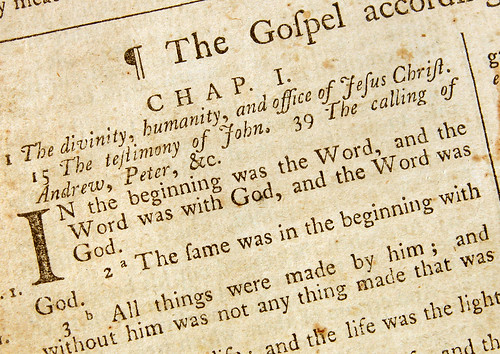
From a sermon by Charles Haddon Spurgeon entitled "Hidden Manna," delivered March 12, 1871. Image by Ian Muttoo under Creative Commons License.